


If you are a Veteran seeking disability compensation, you should strongly consider filing for SSD benefits. Veterans can qualify for both VA and SSD benefits. However, VA and Social Security Disability benefits have different requirements.
Many Veterans don’t realize this, but you can qualify for both VA disability benefits and Social Security Disability at the same time. These are two completely separate systems with different rules and requirements, and receiving one does not prevent you from receiving the other.
Below is an overview of the options available to you as a Veteran seeking Social Security Disability. If you have additional questions, a VA Disability advocate can be your best resource.
Table of Contents
Date Last Insured: Why Work History Matters For SSDI
For Veterans under retirement age, your insured status is one of the most important eligibility requirements.
To receive SSDI, it’s not enough that you worked at some point in your life. The Social Security Administration requires that you worked recently and consistently before becoming disabled.
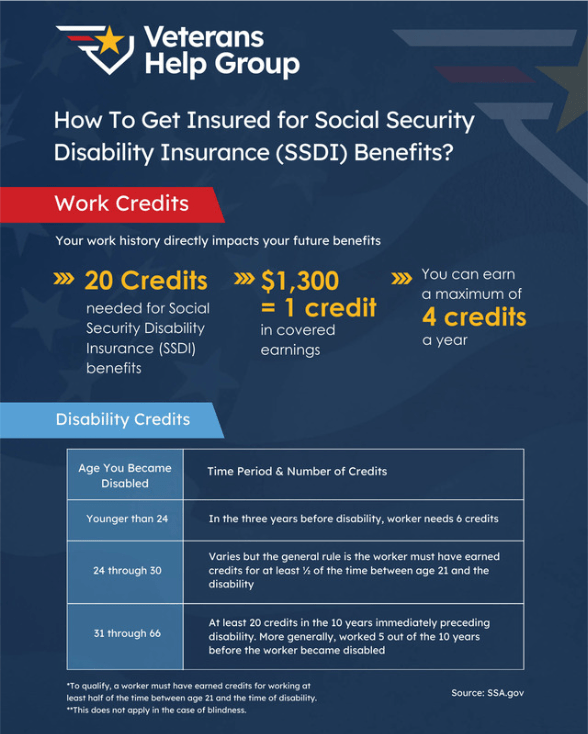
The 5 Out of 10 Rule (20/40 Rule)
The simplest way to check eligibility:
You must have:
- Worked 5 out of the last 10 years, and
- Paid Social Security taxes during that time
SSA measures this in quarters:
- 40 quarters (10 years total)
- You need 20 quarters of work
The years don’t have to be consecutive, they just need to add up.
Expiration of Insured Status
Once you stop working and paying into Social Security, your coverage doesn’t last forever.
Typically, your SSDI eligibility expires about five years after you stop working. This expiration date is called your Date Last Insured (DLI). If your disability begins after your DLI, you may not qualify.
Example of a Date Last Insured:
If someone:
- Worked and paid taxes from 2014–2018
- Stopped working in 2019
- Became disabled in December 2023
They would likely still qualify because their disability occurred before their DLI. But if the disability began in 2024, they may no longer be insured. Timing matters a lot.
Remote Date Last Insured for Veterans
This is especially important for Veterans. Many Veterans stop working years earlier due to service-connected medical conditions and don’t apply for SSDI right away. Good news, you may still qualify, even if you haven’t worked recently.
As long as:
- You worked 5 out of 10 years before you stopped working, and
- Your disability began before your DLI
You may still be eligible.
Example:
A Veteran:
- Worked from 2000–2010
- Stopped working due to medical issues
- Never applied until years later
They could still qualify if medical evidence shows they were disabled before their DLI (likely around 2015). Medical documentation from that earlier period is critical.
Expedited SSDI Claims for Veterans (Dire Need & TERI Cases)
Some SSDI claims move faster. SSA recognizes certain “dire need” situations that qualify for expedited processing.
Terminal Illness (TERI)
If you have a terminal diagnosis, your claim is prioritized immediately.
Homeless or Without Basic Needs
If you lack:
- Housing
- Utilities
- Food or other basic necessities
Your case may be flagged for faster handling.
100% Disabled Veterans
Veterans with:
- 100% VA disability rating, or
- Total Disability Individual Unemployability (TDIU)
Are entitled to priority processing of their SSDI claims. This can significantly reduce wait times.
Medicare & TRICARE: How They Work Together
When you have Medicare Parts A and B, and you are TRICARE eligible, you automatically receive coverage from TRICARE For Life (TFL). There are no enrollment fees or forms. Medicare and TFL work together to minimize a member’s out-of-pocket expenses. (See TRICARE Handbook).
TRICARE For Life (TFL)
Once you have Medicare Part A and Medicare Part B, you automatically receive TRICARE For Life coverage. No extra enrollment or fees required.
Here’s how it works:
- Medicare pays first
- TRICARE pays second
- TRICARE often covers deductibles and coinsurance
This setup usually means very low out-of-pocket costs.
You can see, medicare providers, military hospitals, most civilian providers, it gives you a lot of flexibility.
Why Filing SSDI Is Worth It for Veterans
Even if you already receive VA benefits, SSDI can provide:
- Additional monthly income
- Medicare eligibility
- Financial stability for your family
- Protection if your VA rating changes
For many Veterans, it’s simply money left on the table if you don’t apply.
We Can Help With Your Social Security Disability Claim:
At Veterans Help Group, we understand how stressful and complicated the VA disability process and related issues can be. Our VA-accredited expert advocates put years of experience to work for you and your family. Contact us now at 855-855-8992 to learn more about how we can help you!
Frequently Asked Questions About SSDI for Veterans
Navigating Social Security Disability as a Veteran can feel confusing, especially when you’re already dealing with VA benefits. Here are a few quick answers to the questions we hear most often.
Can I receive VA disability benefits and Social Security Disability at the same time?
Yes. You can receive both benefits at the same time because they are separate programs with different rules. VA disability compensates you for service-connected conditions, while SSDI pays you if you can’t work due to a disability. Many Veterans qualify for both and use them together to increase their monthly financial support.
Does a 100% VA disability rating automatically qualify me for SSDI?
Not automatically, but it definitely helps. Social Security uses different medical and work rules than the VA. However, Veterans with a 100% rating or TDIU can receive expedited processing, and strong VA medical evidence can make your SSDI case much stronger.
How long do I have to apply for SSDI after I stop working?
Your eligibility is tied to your work history through something called your Date Last Insured (DLI). Most people have about five years after they stop working before their coverage expires. If you wait too long, you may lose eligibility, so it’s usually best to apply as soon as your disability prevents you from working.


