


Table Of Contents
Different Types of 100% VA Disability Ratings (Updated 2026)
If you’re applying for or already receiving veterans disability benefits, you likely know that a 100% disability rating offers the most comprehensive benefits.
A veteran with a 100% rating receives full monthly disability pay, which in 2026 starts at $3,934.74 for a single veteran. This amount increases if you have a spouse, children, or dependent parents. For example, a veteran with a spouse and one child could receive over $4,318/month, and each additional dependent adds more to your monthly pay.
But here’s what many veterans don’t realize: there are several different ways to qualify for 100% VA disability benefits including some options available even if your rating isn’t technically at 100%.
Let’s break down the different ways veterans can reach 100% VA disability, what additional benefits are available, and how to make sure you get everything you’re entitled to.
How to Qualify for a 100% VA Disability Rating
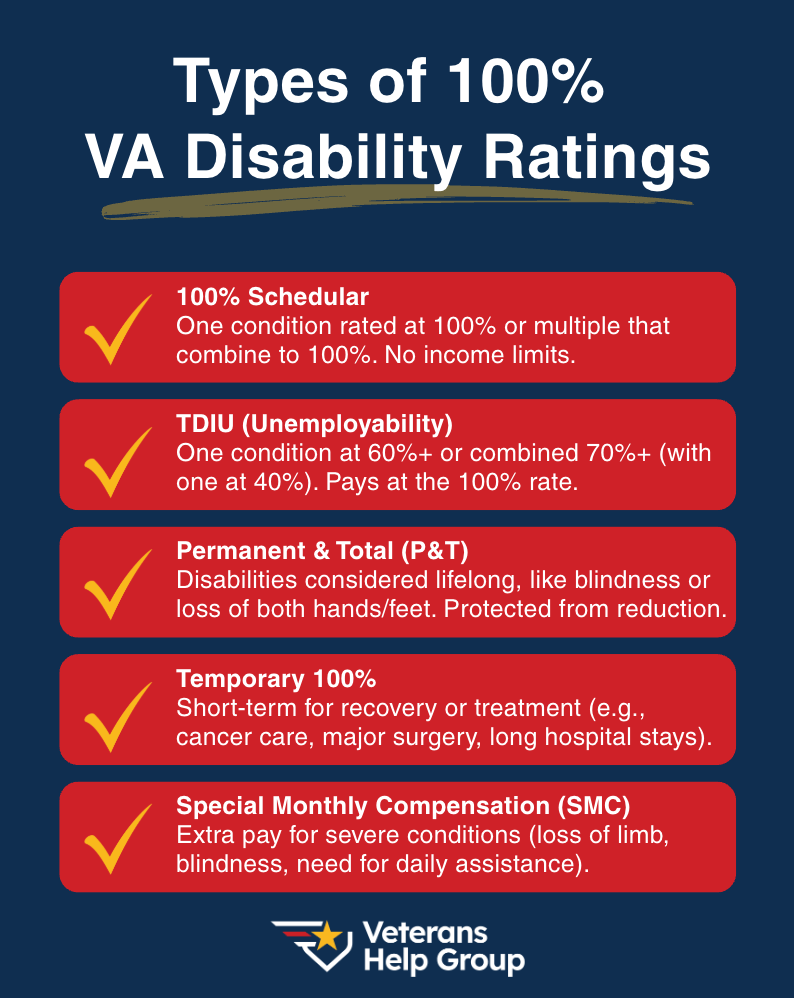
The first and best-known way to receive full veterans disability benefits is to be rated 100% disabled. This may mean being assigned a 100% disability rating for a single service-connected disability or reaching 100% disability through a combination of two or more service-connected conditions. You may hear this described as a 100% schedular rating.
Unlike Social Security Disability and most other types of disability benefits, veterans disability benefits may be available even if you are working–no matter how much money you earn. That’s because the disability rating is based on your limitations, not specifically on your ability or inability to engage in substantial gainful activity.
Additional steps veterans can take to strengthen a claim include: gathering comprehensive medical evidence, filing claims for secondary or multiple conditions, and attending regular follow-up appointments to document ongoing impact.
TDIU Benefits – Another Route to Benefits at the 100% Level
If the VA finds that a veteran is unemployable due to service-connected disabilities, they may be deemed individually unemployable. In that case, the veteran may be entitled to VA disability benefits at the 100% level if either:
- They have a disability rating of at least 60% for a single condition, or
- They have a disability rating of at least 70% based on combined conditions, with at least one condition rated at 40% or higher
If the VA determines your service-connected conditions prevent you from maintaining gainful employment, you’ll be paid at the 100% rate through TDIU.
TDIU can also apply to veterans whose combined conditions do not reach 100% on their own but still prevent substantial gainful employment.
Permanent and Total Disability (P&T)
A P&T rating means your disability is considered both permanent and total. Once granted, the VA generally won’t re-examine your condition or reduce your rating.
Examples of conditions that may qualify:
- Total blindness in both eyes
- Loss of both hands or both feet
- Other severe, non-improving conditions
While P&T ratings are designed to be lifelong, the VA can still review them in very rare situations (fraud, clear error, or misrepresentation). For most veterans, P&T provides strong protection and peace of mind.
P&T veterans are also typically assigned to VA Priority Group 1, giving full access to VA health care services, long-term care benefits, and additional support for dependents.
Temporary 100% Ratings
Not all 100% ratings are permanent. Veterans may qualify for a temporary 100% disability rating while undergoing treatment or recovery for a service-connected condition.
Common examples include:
- Cancer treatment (like for Agent Orange–related lymphoma)
- Hospitalization for more than 21 days
- Recovery from surgery for a service-connected condition
These ratings remain in place until the recovery period is over. The VA will typically continue 100% pay during active cancer treatment and for six months following treatment to allow recovery before reevaluating residual effects.
Special Monthly Compensation (SMC)
Some veterans rated at 100% may also qualify for Special Monthly Compensation (SMC), additional, tax-free benefits provided when disabilities are especially severe (such as loss of use of limbs, blindness, or the need for aid and attendance). Even smaller SMC levels like SMC-K add extra compensation each month.
This extra tax-free benefit applies in cases of:
- Loss of limbs
- Severe vision or hearing loss
- Needing “aid and attendance” for daily activities
Even at smaller levels, like SMC-K, which adds about $136/month, this can significantly increase your total benefits. Higher SMC levels can increase monthly benefits well above the standard 100% rate for veterans with extreme functional limitations.
Talk to a VA Disability Benefits Advocate
The path to the maximum veterans disability benefits you deserve is complicated, and your success may depend on how clear and thorough your claim is. At Veterans Help Group, we’ve helped thousands of disabled veterans apply for benefits and/or appeal denials or disability ratings.
We know what type of evidence the VA is looking for to establish a claim, and we can help you submit the most effective claim or appeal possible. To learn more, call 855-855-8992 or click here to contact us for a free consultation.
FAQs About 100% VA Disability Ratings
Can I receive 100% VA benefits if I’m still working?
Yes. VA disability ratings are based on your service-connected conditions, not on your income or employment status.
What is the difference between P&T and TDIU?
P&T means your condition is permanent and total, with little chance of reevaluation. TDIU provides 100% pay if your service-connected disabilities prevent you from working, even if your schedular rating is below 100%.
How does Special Monthly Compensation (SMC) work?
SMC adds extra, tax-free money to your 100% VA disability pay if you have especially severe disabilities, such as loss of limbs, blindness, or the need for daily assistance.
Are there additional benefits for my family?
Yes. Dependents may be eligible for health coverage, educational benefits, and DIC if you pass away from a service-connected condition. Other perks can include commissary and exchange privileges, VA educational assistance, and adaptive housing support.
Do temporary 100% ratings become permanent?
Temporary ratings only last for the duration of treatment or recovery. Afterward, the VA reevaluates your condition and assigns a permanent rating if appropriate.
Disabled Veteran Resources:


VA Benefits for Women Veterans: What Most Women Miss
Women veterans are the fastest-growing group of veterans in the United States. According to the...

MST in Female Veterans: What You Need to Know
MST in Female Veterans: What You Need to Know Unfortunately, military sexual trauma (MST) is quite...

VA Disability Benefits for Female Sexual Arousal Disorder: What Veterans Need to Know
VA Disability Benefits for Female Sexual Arousal Disorder: What Veterans Need to Know Female...


